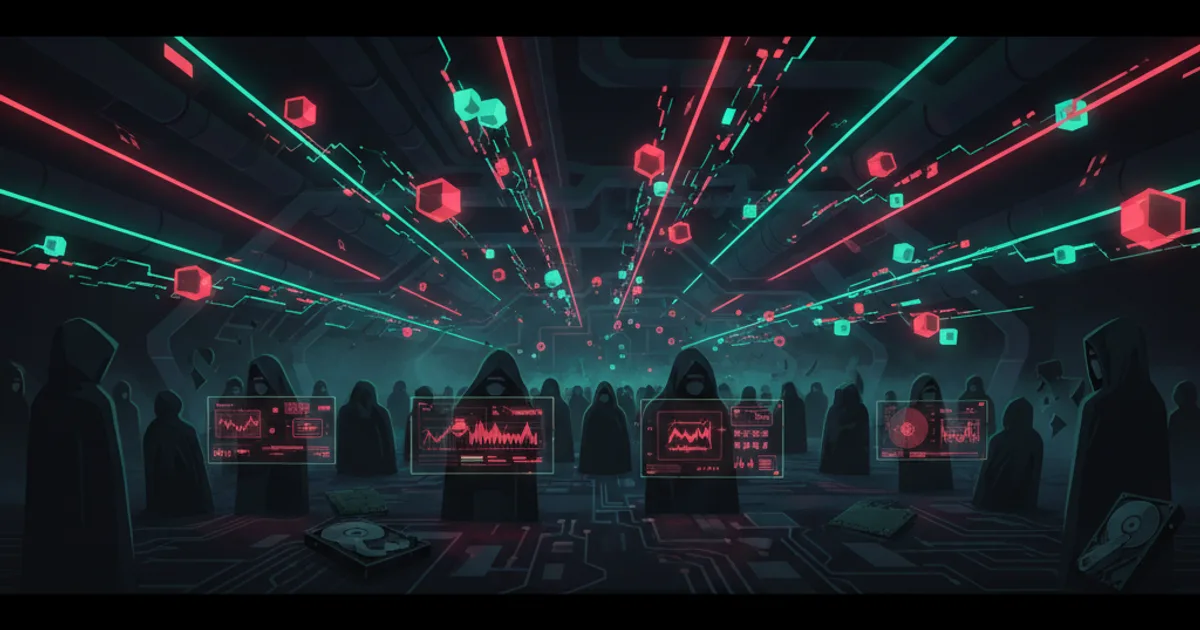
After a data breach, your stolen information typically ends up on dark web marketplaces and underground forums within hours to days. Criminal buyers purchase it in bulk to commit identity theft, financial fraud, and credential stuffing attacks against your other accounts. Your data remains dangerous for years — stolen email and password combinations from breaches that happened in 2018 are still being used in attacks as of 2026.
Once your data leaves a company’s servers in a breach, it enters a well-organised underground economy. Understanding exactly what happens to your stolen data helps you grasp why acting fast matters — and why a single breach can haunt you for years if you do not take the right steps.
Where does stolen data end up after a breach?
Stolen data follows a predictable path through the criminal underground. Within hours of a breach, the data typically moves through these stages:
- The attacker’s private collection — the hacker who stole the data keeps the original copy and may use it directly or sell it
- Private forums and Telegram channels — the data is offered for sale or shared with trusted criminal networks
- Dark web marketplaces — bulk datasets appear on specialised markets where anyone with cryptocurrency can buy them
- Public paste sites and free dumps — older data eventually gets leaked for free, making it available to millions of low-skill attackers
As of 2026, researchers estimate there are over 24 billion stolen username and password combinations circulating across these channels. That is roughly three sets of credentials for every person on Earth.
The speed varies. High-value financial data might be used within hours. Bulk email and password dumps might take days or weeks to appear on public markets. But once data is out, it never comes back.
Who buys stolen data and what do they do with it?
Different types of criminals buy different types of data:
- Credential stuffers buy email and password lists in bulk. They use automated tools to test these credentials against hundreds of popular websites. If you reused your password, they get into your accounts
- Identity thieves buy records that include names, dates of birth, addresses, and Social Security numbers. They use this data to open fraudulent bank accounts, apply for credit cards, or file fake tax returns in your name
- Financial fraudsters buy credit card numbers, bank account details, and payment information. They make purchases or drain accounts before the victim notices
- Phishing specialists buy email addresses with associated personal details. They craft targeted scam emails that reference real information about you, making the scams far more convincing
- Corporate spies buy employee credentials to gain access to company systems and steal trade secrets or deploy ransomware
The prices are shockingly low. As of 2026, a stolen email and password pair sells for under one dollar. A complete identity package with Social Security number, date of birth, and address sells for around ten to fifteen dollars. Credit card details with full information sell for five to thirty dollars depending on the card limit.
How quickly do hackers start using stolen data?
Speed varies depending on the type of data and the attacker’s goals, but the timeline is faster than most people expect:
- Within hours — automated credential stuffing attacks begin testing your email and password on major sites
- Within 1-3 days — financial data is tested with small transactions to verify the cards are still active
- Within 1-2 weeks — identity theft attempts begin with applications for credit or fraudulent accounts
- Within 1-3 months — targeted phishing campaigns launch using your personal details for social engineering
- Ongoing for years — your data gets resold, reshared, and repackaged into new compilations
Research from cybersecurity firms shows that stolen credentials are tested against other services within an average of 12 hours of a breach becoming public. In some cases, attackers who had early access to the data were using it weeks before the breach was even announced.
This is why the single most important thing you can do after a breach is check what was exposed and act immediately.
Why is changing your password not always enough?
Changing your password on the breached site is essential, but it only solves part of the problem. Here is why:
- Password reuse — if you used the same password on other sites, those accounts are still vulnerable until you change them too
- Data beyond passwords — if the breach exposed your name, address, phone number, or Social Security number, changing a password does nothing to protect that information
- Delayed attacks — your data may sit in a database for months before someone buys and uses it. Changing one password today does not protect you from an identity theft attempt six months from now using your leaked personal details
- Compiled databases — attackers combine data from multiple breaches to build complete profiles. Your email from one breach, your password from another, and your phone number from a third all get merged into a single record
The right response depends on what was exposed. Use EmailLeaked’s breach checker to find out exactly what data was compromised, then take the appropriate steps for each type of data.
For a complete action plan, read: What to do immediately after your email is found in a data breach
What is the difference between low-risk and high-risk exposed data?
Not all breaches carry the same level of danger. The risk depends entirely on what type of data was stolen:
Lower risk (still requires action):
- Email addresses only — expect more spam and phishing attempts
- Usernames — limited risk on their own
- IP addresses — minimal direct risk for most people
Higher risk (act immediately):
- Passwords — change them everywhere you used them, enable two-factor authentication
- Phone numbers — watch for SIM swapping attempts and smishing (SMS phishing)
- Dates of birth — combined with other data, used for identity verification fraud
Critical risk (take emergency action):
- Social Security numbers — freeze your credit with all three bureaus immediately
- Financial account details — contact your bank, monitor statements daily
- Government ID numbers — report to relevant authorities
- Health insurance information — watch for medical identity theft
Even “low risk” data becomes dangerous when combined with data from other breaches. An email address alone is low risk. An email address combined with your password, phone number, and date of birth from three different breaches is a complete attack package.
You can check which breaches have affected you and browse known compromised companies in our breach database.
How long does stolen data remain dangerous?
The uncomfortable truth is that stolen data remains dangerous essentially forever. Here is the timeline:
- 0-6 months — highest risk period. Active attacks using fresh data. Credential stuffing, phishing, and financial fraud peak
- 6-12 months — data is resold at lower prices. Attacks continue but are less targeted
- 1-3 years — data appears in large compiled databases. Still actively used for credential stuffing. As of 2026, passwords leaked in 2022 breaches are still successfully used to break into accounts
- 3-5 years — data is freely available. Lower-skill attackers access it. Still dangerous if passwords were never changed
- 5+ years — personal information like Social Security numbers, dates of birth, and addresses remain valid and dangerous indefinitely. Passwords may have been changed, but personal details rarely change
A study by SpyCloud found that 65% of stolen credentials from breaches over three years old had never been changed by the account holder. This means the majority of old breach data is still valid and usable.
The only way to limit the damage is to:
- Use a unique password for every account so one breach cannot cascade
- Enable two-factor authentication so passwords alone are not enough
- Regularly check your email for new breaches and act immediately when they appear
Frequently asked questions
Can I get my data removed from the dark web?
No. Once data has been copied and distributed across underground markets and forums, there is no way to recall or delete it. It gets copied, repackaged, and reshared indefinitely. The only effective response is to make the stolen data useless — change your passwords, enable two-factor authentication, and freeze your credit if personal identification numbers were exposed.
How quickly do hackers use stolen data?
Automated credential stuffing attacks typically begin within hours of a breach becoming public. Financial data is tested within days. Identity theft attempts using personal information can start within weeks. However, data also sits in databases for months or years before being used, which is why old breaches are still dangerous.
Is old breach data still dangerous?
Yes. Research shows that the majority of stolen passwords from breaches over three years old have never been changed. Personal information like Social Security numbers, dates of birth, and home addresses rarely change at all. Attackers routinely compile old breach data into new databases and use it in fresh attacks as of 2026.
What do hackers do with email addresses?
Email addresses are used for credential stuffing (testing known passwords against your accounts), phishing campaigns (sending fake login pages), spam, and as identifiers to link your data across multiple breaches. A confirmed active email address is valuable because it means the target is a real person who can be attacked through multiple channels.
Can stolen data be used years later?
Absolutely. Personal identification data like Social Security numbers, dates of birth, and government IDs remain valid for decades. Even passwords are often still valid years after a breach because most people never change them. Data from a 2020 breach can still be successfully used in an attack in 2026 if the victim never took protective action.
What is the dark web?
The dark web is a part of the internet that requires special software (like the Tor browser) to access. It hosts marketplaces where stolen data, hacking tools, and illegal services are bought and sold using cryptocurrency. While the dark web has legitimate uses, it is primarily known as the destination for stolen data from breaches. Law enforcement monitors these markets, but new ones appear as fast as old ones are shut down.